Our Locations
Four offices: California, Oregon, and Hawaii. Local fluency in each. National experience behind every plan set.
Local Knowledge — National Experience
Building where we live.
Our Oakland office serves developers, architects, and general contractors across the East Bay and throughout California — from small infill lots to large multi-phase developments.
Oakland is where Calichi started — our first physical office opened in 2010, and it remains our corporate headquarters. We work with local agencies and local developers on every type of project the East Bay runs: affordable and market-rate housing, mixed-use, K-12 modernizations, retail, industrial, and civic. We know the agencies. We know the process. We know the small details that fast-track projects — fewer plan check cycles, predictable conditions of approval, and permit timelines that hold.
Some of the Jurisdictions We Work In
Our Oakland team regularly submits and manages entitlements, grading permits, and utility plans across Northern California and beyond:
- City of Oakland
- City of Albany
- City of Alameda
- City of Berkeley
- City of Concord
- City of Dublin
- City of Emeryville
- City of Fremont
- City of Hayward
- City of Lafayette
- City of Moraga
- City of Novato
- City of Pinole
- City of Pleasant Hill
- City of Pleasanton
- City of Richmond
- City of San Francisco
- City of San Jose
- City of San Leandro
- City of Santa Clara
- City of Sunnyvale
- City of Walnut Creek
- City of Fresno
- City of Sacramento
- City of South Lake Tahoe
- Alameda County
- Contra Costa County
- Marin County
- San Francisco County
- Santa Clara County
We also coordinate with regional agencies including EBMUD, PG&E, Caltrans, ACFCD, CCCFCD, SFPUC, and the Tahoe Regional Planning Agency depending on the project scope and location.
Beyond Northern California, we have extensive experience working across the state and the country. We have projects along the I-5 corridor and Highway 99, in nearly every municipality throughout the Los Angeles and San Diego metros, plus Costa Mesa, Newport Beach, Palm Springs, and the broader SoCal region. Nationally, our work spans Arizona (Mesa, Phoenix), Nevada, Illinois (Chicago), Ohio (Cincinnati, Columbus, Dayton, and more), Indiana, Kansas, and Kentucky. Past international work includes China and Saudi Arabia.
C.3 Stormwater Compliance
Provision C.3 of the Municipal Regional Stormwater Permit (MRP) governs post-construction stormwater treatment for new development and redevelopment projects in the Bay Area. Under MRP 3.0 (effective July 2023), most projects that create or replace 5,000 square feet or more of impervious surface are required to include stormwater treatment measures.
We design the treatment capacities, hydraulic capacities, and aesthetic forms of bioretention facilities, pervious pavement systems, and flow-through planters sized to meet C.3 requirements and client specifications. We also prepare the Stormwater Control Plan (SCP) and the accompanying Operation and Maintenance agreement required for final approval.
Southern California Stormwater
Southern California has its own stormwater framework. LA County projects fall under the MS4 Permit R4-2021-0105 and the 2021 LID Standards. San Diego projects follow the Priority Development Project (PDP) framework. Both regions use the 85th-percentile 24-hour storm for sizing (not the Bay Area's 80th percentile). Recent work includes East End Studios' Griffith Campus in Glendale — a 10-acre production facility with 11 soundstages spanning 611,000 square feet. We designed LID-compliant stormwater controls to meet the City of Glendale's MS4 requirements under the LA County Phase I permit.
Project Types
Typical East Bay and California projects include:
- K–12 schools (DSA, modernization, living schoolyards)
- Institutional and civic projects
- Affordable and market rate housing
- Streetscape and roadway projects
- Large scale commercial, retail, and corporate campuses
- Parks and public open space
- Municipal projects and on-call contracts
- ADA compliance and path-of-travel design
- Stormwater engineering (C.3, LID, hydromodification)
Bay Area & Northern California Projects
Mixed-Use Infill — Emeryville
42-unit mixed-use on a constrained infill site with C.3 stormwater, EBMUD coordination, and a 12-foot grade change.
K-12 Campus Modernization — Oakland
OUSD campus with DSA review, ADA path-of-travel upgrades, and bioretention facilities sized to C.3 requirements.
Retail Pad Redevelopment — San Leandro
Former gas station site with environmental constraints, new utility connections, and a tight city review timeline.
Southern California Projects
Chase Bank West Coast Expansion
60+ branch modernizations and new builds across LA County, Orange County, San Diego, and the Inland Empire. Huntington Beach, Newport Beach, Pasadena, Glendale, Irvine, Costa Mesa, and more.
Lucid Motors Demo — Costa Mesa
EV showroom and service facility in Orange County. Site civil, grading, and utility coordination through City of Costa Mesa permitting.
Fletcher Jones Audi — Beverly Hills
Audi dealership on Fairfax Avenue in Beverly Hills. Full civil site design including grading, drainage, and utility coordination for a high-end automotive retail build.
Portland to the Columbia. Oregon to Washington.
We opened our Portland office in 2018 because we fell in love with the City and State — we wanted to establish roots in a place we previously only played in. Our Portland team does the site civil work that makes projects move: grading, stormwater, utilities, right-of-way improvements, and the agency coordination that determines whether your schedule holds or slips six months. We work across the metro on multifamily infill, mixed-use on former surface lots, industrial repositioning in the Columbia Corridor, and K-12 modernization. We know the agencies. We know the process. We know the small details that fast-track projects — predictable BES stormwater comments, PBOT ROW requirements we've run block by block, and land use review timelines that actually hold.
Portland's regulatory environment has real specificity. BES stormwater compliance plans aren't boilerplate. PBOT right-of-way requirements change block by block. Type II and Type III land use reviews have their own documentation cadence, and a weak Pre-Application Conference submission can cost you a full cycle before design even starts. We know how this works because we've run it repeatedly across the metro.
Some of the Jurisdictions We Work In
Our Portland team regularly manages grading permits, stormwater plans, and utility coordination across the region:
- City of Portland
- City of Beaverton
- City of Hillsboro
- City of Lake Oswego
- City of Tigard
- City of Tualatin
- City of Gresham
- City of Oregon City
- Multnomah County
- Washington County
- Clackamas County
We coordinate directly with BES, Portland Water Bureau, PBOT, PGE, Pacific Power, ODOT, and Clean Water Services depending on project location and scope.
BES Stormwater & Green Infrastructure
BES compliance plans are not something you can template your way through. Portland's Stormwater Management Manual sets specific thresholds for on-site retention, runoff reduction, and pollution control — and BES reviewers know the difference between a facility that performs and one that just checks a box. Green infrastructure requirements are real: ecoroofs, flow-through planters, vegetated swales, and pervious pavement are standard tools for most Portland infill sites, not optional upgrades.
We design for actual BES review, not the easy version. That means sizing facilities against verified impervious areas, preparing operation and maintenance agreements that satisfy the Bureau, and building in the documentation BES needs to move your plan check forward on the first cycle.
PBOT Right-of-Way & Transportation
Portland Bureau of Transportation requirements go further than most cities. Street improvements, curb extensions, pedestrian connectivity, and bike parking aren't afterthoughts — they're scope items that get determined at Pre-Application or during Type II review, and they have to be designed and permitted alongside the site work. We coordinate PBOT right-of-way improvement plans, half-street construction drawings, bike parking placement per Title 33, and pedestrian path-of-travel upgrades as part of our standard site civil scope.
If your project is near a bike corridor or a planned PBOT improvement, that coordination starts early. Missing it late costs more than doing it right the first time.
Project Types
Typical Portland metro and Pacific Northwest projects include:
- K–12 schools (public, charter, BES compliance)
- Institutional and civic projects
- Affordable and market rate housing
- Streetscape and roadway projects
- Large scale commercial, retail, and corporate campuses
- Parks and public open space
- Municipal projects and on-call contracts
- ADA compliance and path-of-travel design
- Stormwater engineering (BES, Clean Water Services, NPDES)
Projects in the Portland Metro
Boise Street Cottages — SE Portland
Eight detached cottages on an existing parcel at 5504 SE Boise Street, processed under the City of Portland's Middle Housing Land Division expedited subdivision with separate utility services to each home.
10995 E Burnside Street — Portland
Street frontage improvements for a 7-unit residential development on East Burnside. Public Works Permit (PWP) package prepared for the City of Portland covering right-of-way improvements.
Industrial Warehouse — Columbia Corridor
Tilt-up warehouse on a Columbia Corridor infill site. PGE three-phase service coordination, ODOT approach permit, truck circulation grading, and BES stormwater treatment design for a nearly full-coverage impervious site.
Living in the Gorge. Working in the Gorge.
The Columbia River Gorge National Scenic Area has been federal law since 1986, and it created a permit environment unlike anything in the surrounding region. Having an office here means we already know the terrain, the wind exposure, the agency calendar, and the specific thresholds that trigger additional review.
We opened our Hood River office in 2020 to put a team on the ground in the Gorge. We serve developers, school districts, resort operators, and agricultural landowners across the region — on both the Oregon and Washington sides — on projects ranging from multifamily infill to rural winery sites. We know the agencies. We know the process. We know the small details that fast-track projects — the Scenic Area thresholds that trigger extra review, the wind exposure requirements, and the agency calendars on both sides of the river.
Some of the Jurisdictions We Work In
Our Hood River team regularly submits and manages grading permits, stormwater plans, and site civil packages in the following jurisdictions:
- City of Hood River
- City of The Dalles
- City of White Salmon
- City of Bingen
- Hood River County
- Wasco County
- Klickitat County (WA)
We coordinate with regional agencies including the Columbia River Gorge Commission, Oregon DEQ, ODOT, PacifiCorp, Hood River Electric Co-op, and Hood River Watershed Group depending on project scope and location.
The Scenic Area Overlay — What It Actually Means
The Gorge National Scenic Area divides the region into three tiers, and each one operates differently. Special Management Areas require Gorge Commission review for visual impact, vegetation management, and consistency with the Scenic Area Management Plan — sometimes including formal public hearings. General Management Areas fall under county jurisdiction and follow Hood River County or Wasco County codes. Urban areas within the City of Hood River operate under city zoning, urban renewal overlays, and downtown design standards.
Knowing which tier your site falls in — and what that means for your permit timeline — is the first thing we establish. Projects that cross tier boundaries require parallel submittals, and the sequencing matters.
Stormwater & Erosion Control
Oregon DEQ stormwater requirements apply across the region, but Gorge conditions add specificity that standard templates don't address. High-wind erosion rates here far exceed what most SWPPP documents are calibrated for. Low Impact Development principles are increasingly required on development within the Scenic Area boundary. We size detention, design infiltration systems, and write erosion control plans that hold up under both agency review and Gorge weather — not plans imported from a Bay Area project or a Portland suburb.
Project Types
Typical Gorge and Pacific Northwest projects include:
- Institutional projects (K–12 schools, civic, institutional campuses)
- Market rate housing and mixed-use development
- Streetscape and roadway projects
- Large scale commercial and retail
- Industrial
- ADA compliance and path-of-travel design
- Stormwater engineering
- General civil engineering
- Land planning
- Subdivisions and partitions
Projects in the Gorge
3330 Brookside Drive — Hood River
Mixed-use infill project in Hood River with a multi-use path, affordable housing component, and conceptual site planning. Site civil design coordinated with City of Hood River public works and urban renewal.
Hotel Iconica — White Salmon, WA
30-suite boutique hotel on Jewett Blvd with a rooftop lounge facing Mt. Hood. Two-parcel merger, infiltration facilities sized to the 25-year / 15-minute design storm, and water system plans coordinated with Klickitat County.
WAFD Bank — The Dalles, OR
New 2,250 SF ground-up retail bank with two drive-through lanes at 1014 W 6th Street. Site civil, grading, parking, bike racks, pylon sign coordination, and City of The Dalles permitting.
Rooted on Maui. Working across Hawaii.
Hawaii engineering has its own set of realities. Tropical rainfall intensities here require NOAA Atlas 14 Hawaii-specific data — regional generalizations from California or the Pacific Northwest don't apply. Island logistics shape every material decision, from pipe sizing to construction sequencing. Volcanic soils behave differently from continental fills. And the State Land Use District system adds a layer of entitlement complexity unique to Hawaii.
We opened our Maui office in 2013 because of our passion for the island vibe and culture. The local presence allowed us to put engineering on-island rather than running projects remotely from the mainland. We serve clients across Maui County, Oahu, the Big Island, and Kauai — from resort development to K-12 school campuses to affordable housing. We know the agencies. We know the process. We know the small details that fast-track projects — the County of Maui DPW review cycle, coordinating with Hawaiian Electric (HECO) directly, and navigating Special Management Area permits without surprises.
Where We Work
Our Maui team actively submits and manages permits across Maui County. We also take on projects on Oahu, where we've completed mixed-use site planning and K-12 school facilities work in Honolulu.
- Kahului
- Kihei
- Lahaina
- Wailuku
- Paia
- Haiku
- Makawao
- Pukalani
- Oahu / Honolulu
Agency coordination depends on project scope and location. We regularly work with the County of Maui Department of Public Works, Maui County Department of Water Supply, Hawaiian Electric (HECO), Hawaii Department of Health, Hawaii DOT, and the State Land Use Commission depending on what a project triggers.
Stormwater on Maui is its own design problem
Tropical rainfall intensity on Maui is not a footnote — it's a design driver. The 10-year, 24-hour storm event in Kahului is more than double what most mainland cities see. Using NOAA Atlas 14 Hawaii-specific rainfall data isn't optional; it's the difference between a system that performs and one that fails in its first rainy season.
Hawaii DOH administers NPDES stormwater permits, and Maui County's drainage standards reflect the island's sensitivity to nearshore water quality and coral reef ecosystems. That means stormwater systems here lean heavily on infiltration and on-site retention — not just conveyance. We design to those standards from the start, not as a retrofit.
SMA Permits and the State Land Use District
Projects near the shoreline or in environmentally sensitive areas require Special Management Area (SMA) permits through the County of Maui Planning Department. The review process involves public hearings, agency referrals, and findings that go well beyond a standard grading permit. We've supported clients through SMA review and understand what triggers it, what the process looks like, and how to prepare submittals that don't come back for missing information.
Hawaii's State Land Use District system — Conservation, Agricultural, Rural, and Urban — controls what can be built where at the state level before County permits even enter the picture. Knowing which district a parcel sits in, and whether a district boundary amendment is needed, is foundational to any feasibility review. We run that analysis at the outset.
Project Types
Typical Maui and Hawaii projects include:
- Institutional projects (K–12 schools, civic, institutional campuses)
- High-end single family homes
- Market rate multi-family housing
- Resort and hospitality development
- Shoreline engineering
- Flood plain engineering
- Large scale solar
- Large scale commercial and retail
- Industrial
- Stormwater engineering
- General civil engineering
- Land planning and subdivisions
Projects on Maui
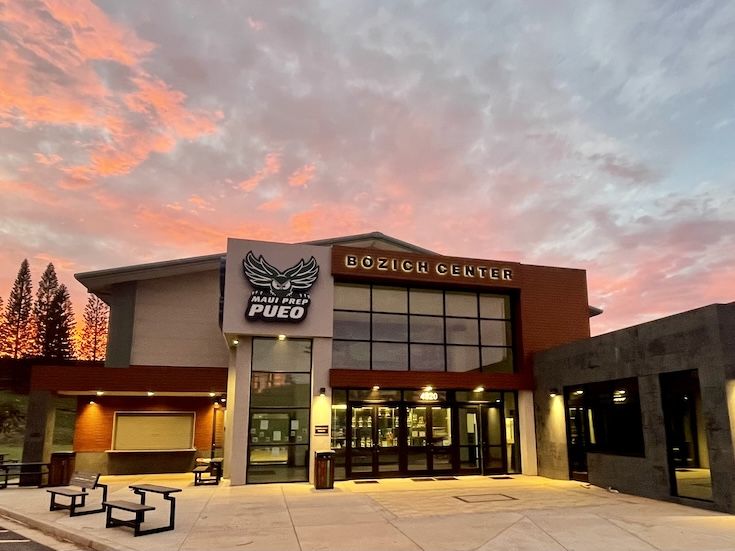
Maui Preparatory Academy
Campus site civil engineering for Maui Prep, including grading, drainage, and utility design coordinated with Hawaii DOE and County of Maui review.
Anaina Hou Pavilion — Kilauea, Kauai
Community pavilion and event venue on the North Shore of Kauai. Full site civil including grading, drainage, new and upgraded utilities, and Kauai County coordination.
Price Residence — Lanikeha, Lahaina
Custom residence on a hillside lot in the Lanikeha subdivision, Lahaina. Site civil, grading, drainage, and Maui County DPW coordination.
Choose the office that can best serve your project
Each Calichi office runs its own projects. Same standards, local knowledge. Tell us where you're building and we'll scope it from there.