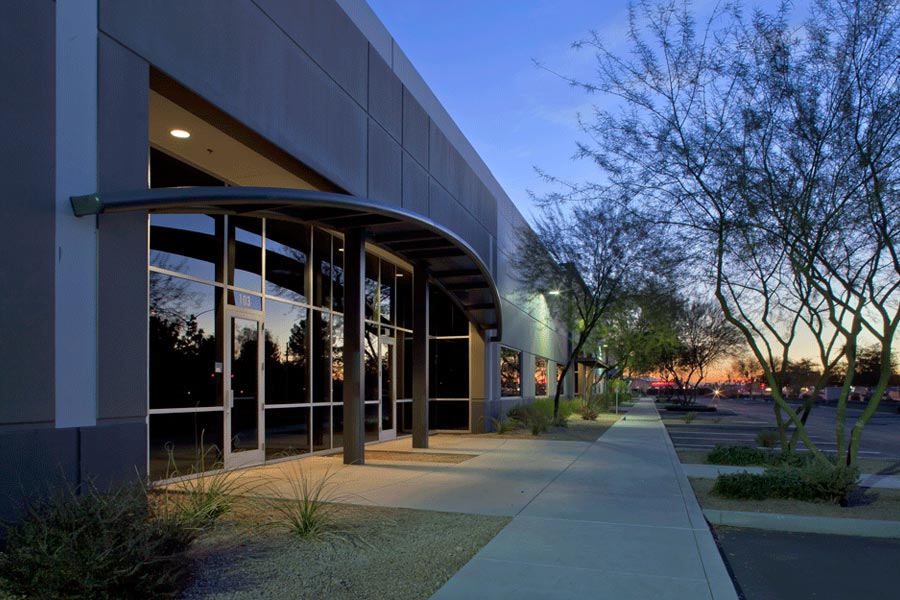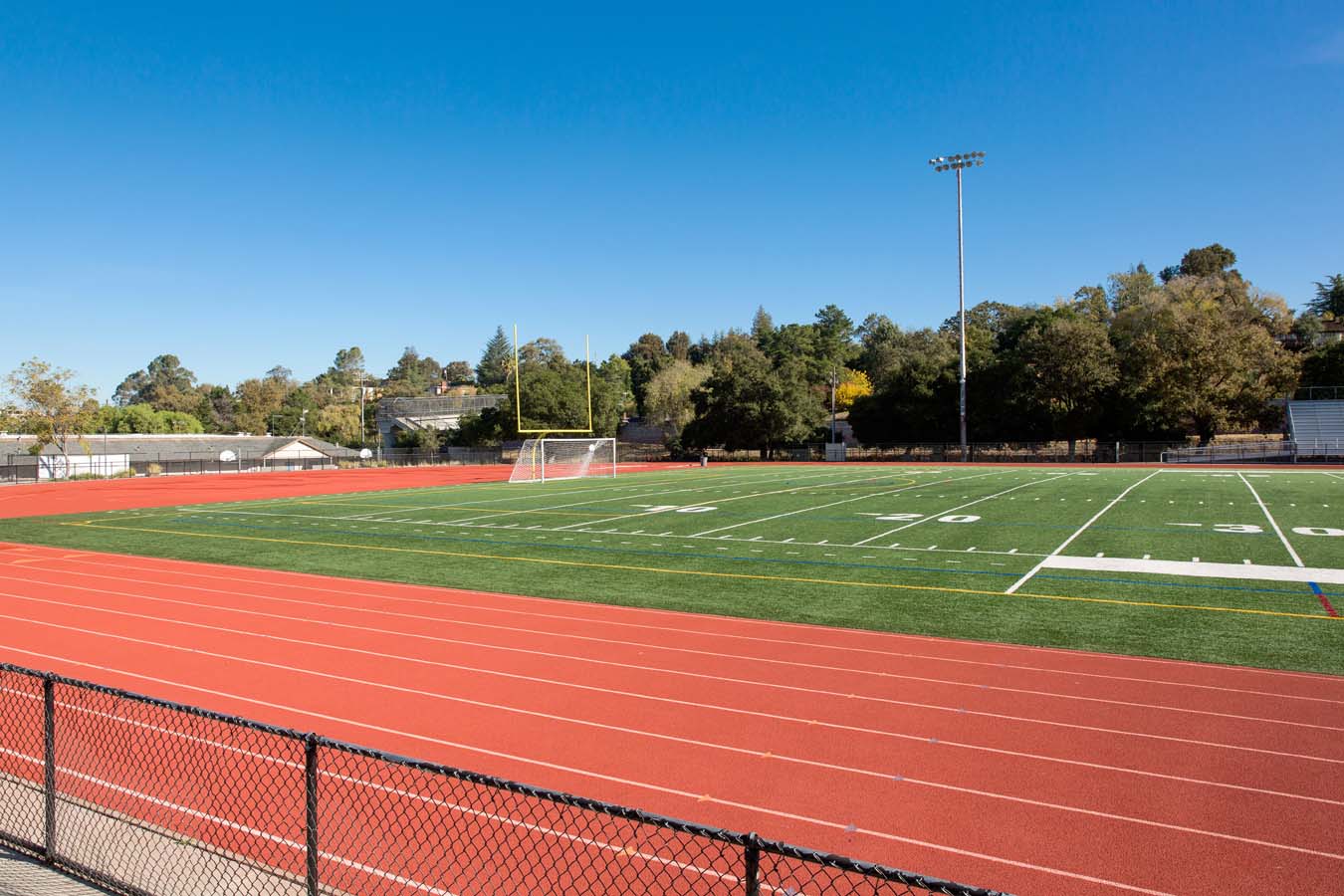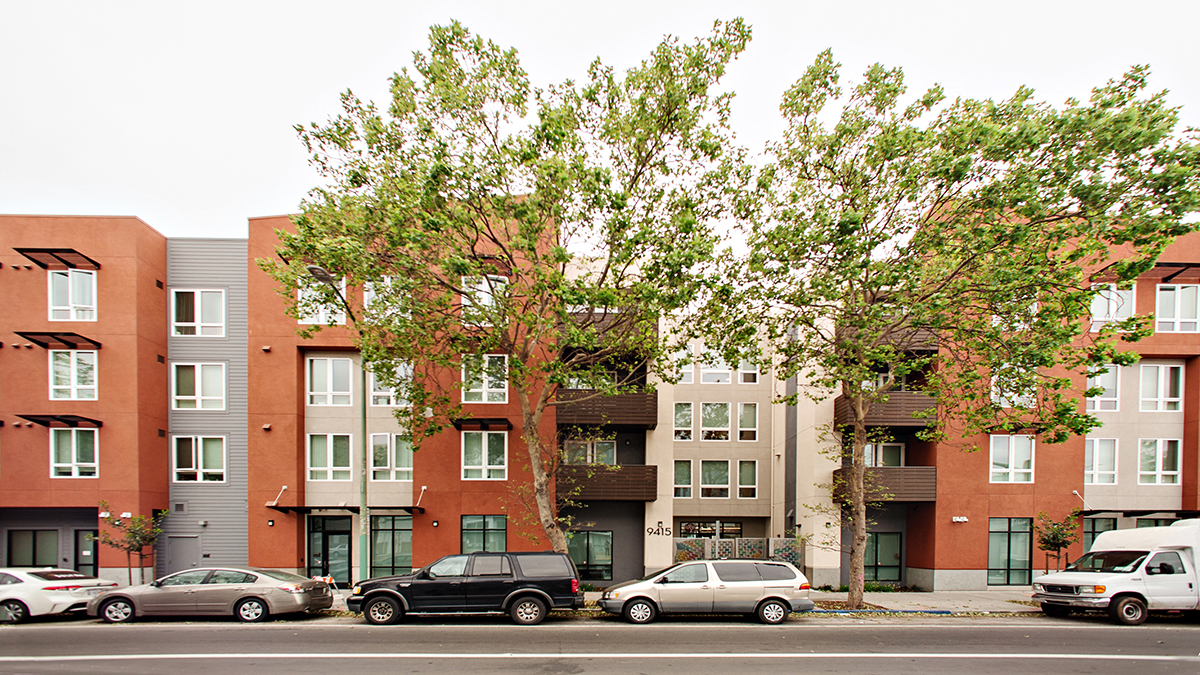
You're building something in California. A warehouse, a school, an apartment complex, a parking lot. Somewhere in the permitting process, someone will say "C.3" and everyone at the table will nod like they know what it means. Half of them don't.
Here's the short version. When you pave over ground that used to absorb rain, California says you have to manage the runoff — treat it, slow it down, infiltrate it, or some combination. The regulation that governs this for new development is called Provision C.3 in the Bay Area (under the Municipal Regional Stormwater Permit), LID requirements under the MS4 Permit in LA County, and the Priority Development Project framework in San Diego. Different names, same idea. You break the hydrology, you fix it.
This article is the reference. We wrote it for the developer who's never heard of C.3 and for the architect who keeps using the wrong threshold from 2019. It covers every tier, every region we work in — Bay Area, LA, San Diego — and every cost and timeline number we can put to paper. Bookmark it. You'll come back.
The Threshold Tiers: 2,500 / 5,000 / 10,000
If someone told you the C.3 threshold is 10,000 square feet, they're three years out of date. That was MRP 2.0.
MRP 3.0 took effect July 1, 2023. The SF Bay Regional Water Quality Control Board dropped the main trigger from 10,000 SF to 5,000 SF for most project types, formalized a lower tier at 2,500 SF, and kept 10,000 SF only for detached single-family homes. The C.3 Technical Guidance was updated to Version 8.3 in June 2025 to match. No MRP 4.0 is in discussion.
Three numbers. Three different obligation levels.
2,500 SF — C.3.i (Small Projects)
Create or replace 2,500+ SF of impervious surface but stay below the full thresholds, and you're in C.3.i. The lighter tier. No Stormwater Control Plan, no O&M agreement, but you need at least one site design measure: direct roof runoff to a rain garden, route pavement runoff to a vegetated swale, or use permeable surfaces for walkways and patios. Think of it as the "don't just pipe everything to the storm drain" rule.
For a 3,500 SF parking lot expansion at a neighborhood commercial building, C.3.i might mean directing new pavement runoff to an adjacent planter strip. Straightforward. Not expensive. But you still have to show it on your plans and the plan checker at ACCWP, CCCWP, or SCVURPPP will verify it's there.
5,000 SF — Full C.3 (Most Projects)
This is where MRP 3.0 changed the math. The full C.3 threshold dropped to 5,000 SF of new or replaced impervious surface for commercial, industrial, multi-family, institutional, and mixed-use projects. That means the complete package: Stormwater Control Plan, LID treatment measures, source controls, hydromodification management, and an O&M agreement recorded against the property in perpetuity.
Under MRP 2.0, a 7,000 SF commercial parking lot replacement was exempt. Under MRP 3.0, it triggers the full program. We've had clients come to us mid-design still working off the old 10,000 SF assumption. That conversation is never fun.
10,000 SF — Single-Family Exception
Single-family homes kept the higher threshold. Most custom homes — a 3,000 SF house, 600 SF garage, 800 SF driveway, 400 SF walkways — land around 4,800 SF. Under the radar. But a large estate with a pool deck, sport court, and winding driveway gets there fast. And single-family projects between 2,500 and 10,000 SF still trigger C.3.i. You're not off the hook.
Regional Variations
These are Bay Area numbers. They don't apply statewide.
- Bay Area MRP: 5,000 SF trigger, sized to the 80th-percentile 24-hour storm
- LA County MS4 (R4-2021-0105): Category-based triggers (not a single SF number), sized to the 85th percentile or 0.75 inches, whichever is greater
- San Diego PDP (R9-2013-0001): 10,000 SF trigger for most projects, 2,500 SF near ESAs, sized to the 85th percentile
A stormwater plan that passes in Oakland won't pass in LA without modifications. We work across all three regions, and assuming the rules transfer is the single most common mistake developers with multi-market portfolios make.
"Created or Replaced" — The Words That Cost Money
The threshold counts all impervious surface being created or replaced. "Created" is straightforward — new pavement, new buildings, new anything rain can't soak through. "Replaced" is the one that generates arguments.
Tear out an existing parking lot and repave it? That's replaced impervious surface, and it counts toward your threshold even though the footprint didn't change. Same square footage. Same location. Still triggers.
Clients push back on this constantly. Doesn't matter. Once you demolish and reconstruct the pavement section, it's replaced impervious area under the permit.
The Maintenance Exception
An asphalt overlay, slurry seal, crack filling, restriping — those are maintenance, not replacement. You're not demolishing to subgrade and rebuilding. Maintenance doesn't trigger C.3.
The Gray Zone
Grinding and repaving 2 inches of AC? Most agencies call that maintenance. Full demolition to subgrade with new base and asphalt? Replacement. The 4-inch grind-and-overlay on deteriorated pavement with base patching? That's the gray zone, and it's the agency's call. Not yours. Not ours. If you're anywhere near that line, get the agency's position in writing before you design around it. We've seen the same scope classified differently by two cities in the same county.
Staying Under the Threshold
If your project is close to a tier boundary, it's worth exploring whether pervious materials can get you under it. A project at 5,200 SF might drop below 5,000 by converting a concrete walkway to pervious pavement or shifting a patio to permeable interlocking concrete pavers (PICP). Swapping 300 SF of standard concrete for pervious concrete can be the difference between a $40,000 Stormwater Control Plan and a C.3.i worksheet.
The materials that work: pervious concrete, PICP, and porous asphalt. Not decomposed granite — DG doesn't meet the engineering standards for exclusion from the impervious calculation under most agency interpretations. The pervious surface needs proper subbase design, field infiltration testing, and a documented maintenance commitment.
But here's the thing: the agency has to agree. You can do the math, show the pervious pavement specs, provide ASTM C1701 infiltration test data — and the plan checker can still say no. We've had it go both ways. A well-documented case with test data and maintenance commitments helps. Walking in with a hand-wave does not.
And don't try phasing. The calculation is cumulative across your entire project. You can't split the work into two 3,000 SF phases and call each one exempt. Plan checkers have seen every version of that strategy.
What a Stormwater Control Plan Requires
Trigger full C.3 and you're preparing an SCP — a standalone document, typically 30 to 60 pages, submitted alongside your grading and improvement plans. It includes:
- Site assessment — existing conditions, soil types, groundwater depth, receiving waters
- Impervious surface calculations — pre-project vs. post-project, broken down by drainage management area
- Treatment measure design — sizing calculations, cross-sections, planting specifications
- Hydromodification management — post-project peak flows can't exceed pre-project for the range of storm events (10% to 100% of the 10-year peak)
- Source control checklist — trash capture, covered loading docks, proper plumbing connections
- O&M plan — inspection schedules, maintenance procedures, responsible party identification
The SCP goes through your local clean water program's review — separate from the city's building department in some jurisdictions (CCCWP runs a parallel review), coordinated through the city in others (most ACCWP jurisdictions). Expect one round of comments. Usually two.
Treatment Measures: Performance Data, Not Just Theory
Treatment measures get sized to the 80th-percentile 24-hour storm in the Bay Area. In practice, your treatment facility needs about 4% of the tributary impervious area as its footprint. That's the 4% rule, and it's not negotiable. For a 5,000 SF project at the new threshold, that's 200 SF of treatment. For 10,000 SF, it's 400 SF. That space needs to exist on your site plan, and that conversation needs to happen before you finalize the parking layout.
Bioretention
The workhorse. An engineered planting bed — biotreatment soil media over Class 2 permeable aggregate, with an underdrain connected to the storm drain system. SFPUC's June 2025 specifications call for 18 inches of BSM minimum, 5 in/hr infiltration rate over the project life, and a 60-70% sand / 30-40% compost media blend. The MRP 3.0 Technical Guidance (Version 8.3) aligns with this approach.
Real-world performance data tells a more complicated story. Median O&M costs run $0.687 per square foot per year — that's $250 to $3,880 annually depending on facility size. Common failure modes: surface crusting and sealing (the soil media develops an impervious crust), extended drawdown times (should drain in 12-18 hours, often doesn't), underdrain clogging from sediment migration, and tree roots crushing underdrains. That last one happens more than anyone admits.
Pervious Pavement
Pervious concrete, PICP, or porous asphalt that self-treats — no separate bioretention needed for the pervious footprint. The pavement doubles as the treatment measure.
The catch is maintenance, and the data here is sobering. Caltrans 2023 research shows that without maintenance, pervious pavement infiltration rates drop below 10 in/hr within years of installation. Complete blockage is common near landscaping where organic debris migrates into the pavement surface. Caltrans specs call for minimum 10 in/hr infiltration, vacuum sweeping twice per year, and pressure washing once per year.
Those vacuum regeneration sweepers cost $150,000 to $300,000 each. Most HOAs and commercial property managers don't own one, and renting one twice a year for a 3,000 SF pervious concrete parking area is a line item that disappears from budgets fast. If your soil doesn't perc, you're adding an underdrain system and aggregate reservoir underneath, which drives cost up another 40-60%.
Flow-Through Planters
Raised bioretention boxes — lined, with an underdrain — that collect roof drainage or adjacent pavement runoff. Same 4% sizing rule. The advantage: they're contained, they don't rely on native soil infiltration, and they fit tight spaces between buildings and walkways. We spec these on constrained urban sites where in-ground bioretention isn't feasible. They work. They're predictable. They're not glamorous.
The O&M Agreement: What It Actually Costs
Every full C.3 project requires an Operations and Maintenance agreement recorded against the property. Signed, notarized, filed with the county recorder's office. It obligates the current and all future property owners to maintain the stormwater treatment measures. In perpetuity. That word is doing a lot of work in that sentence.
Here's what developers don't hear until it's too late. The agreement isn't just a form you file and forget. It requires annual inspections, documented maintenance, and records available for agency review. The local program conducts 5-year inspections to verify compliance. When they show up and the bioretention facility has 6 inches of sediment on the surface, standing water after 48 hours, and dead plants — that's a violation, and the enforcement notice goes to the current property owner, not the developer who built it five years ago.
What does ongoing compliance actually cost? For bioretention: $250 to $3,880 per year depending on size. For pervious pavement: vacuum sweeping at $0.15-$0.25/SF twice annually plus pressure washing. For a mid-size commercial project with 400 SF of bioretention and 2,000 SF of pervious pavement, you're looking at $2,000-$4,000 per year in maintenance — forever. Property managers who inherit these obligations without understanding them are the ones who get violations.
We've seen projects stall at certificate of occupancy because the O&M agreement wasn't executed. Don't save this for the end. Get it to your attorney early, get it signed, get it recorded. C.3.i projects don't require one — that's a key reason staying under the full threshold matters.
Southern California: Different Permits, Different Math
Los Angeles County
LA County's MS4 Permit (R4-2021-0105) uses category-based triggers rather than a single square-footage number. The design storm is the 85th percentile 24-hour event or 0.75 inches, whichever is greater. The 2025 LID Standards Manual updated requirements from 2014 with added emphasis on Trash TMDL compliance. LA's treatment hierarchy is codified, not suggested: on-site infiltration first, then bioretention or green roofs, then biofiltration, then off-site as a last resort.
LA is also where stormwater credit trading is actually happening. The Safe Clean Water Program launched active credit trading in January 2025. If your project can't meet requirements on-site, you can purchase credits from regional projects that overperform. It's not cheap and it's not the first option, but it exists. A new CII (commercial, industrial, institutional) permit targeting facilities with 5+ acres of impervious surface is expected in 2026-2027 — that will expand the regulated universe significantly.
San Diego County
San Diego's PDP framework triggers at 10,000 SF of new impervious surface for most projects, 2,500 SF near Environmentally Sensitive Areas. The 85th percentile 24-hour event governs sizing. PDP projects follow the BMP Design Manual. San Diego and Orange County are piloting a Water Quality Equivalency framework that could eventually enable credit trading similar to LA's program.
The Bay Area has no live credit trading program. Offsite mitigation is always the last resort.
The Legal Landscape Just Shifted
In March 2025, the U.S. Supreme Court decided City and County of San Francisco v. EPA. The ruling found that end-result permit conditions — provisions that hold permittees responsible for receiving water quality outcomes beyond their direct control — are legally vulnerable to challenge. If a permit says you're liable for downstream water quality conditions you can't control, that language is now on shaky ground.
The practical near-term effect is limited. Your C.3 obligations aren't going away. But the ruling creates leverage in permit negotiations and sets up future challenges to how stormwater permits assign responsibility. If you're a large developer or municipality, your environmental counsel should be watching this closely.
On the construction side, the 2022 Construction General Permit transition is complete — the September 1, 2025 deadline passed. Documentation is now a first-order enforcement target. The Lahontan Regional Board's $1.6 million settlement is instructive: roughly one-third of that penalty was for paperwork failures, not actual discharges. Missing SWPPPs, incomplete inspection logs, absent QSP/QSD documentation. The message is clear. QSD/QSP fees ($3,000-$8,000/month for Risk Level 2/3 projects) are not optional line items you can value-engineer away.
Where the Industry Is Headed
Three trends are shaping C.3 compliance over the next five years.
Credit trading will expand. LA's Safe Clean Water Program is the proof of concept. San Diego and Orange County are building frameworks. The Bay Area will get there eventually, but we're not holding our breath. For now, on-site treatment remains the only reliable path in Northern California.
Enforcement is tightening on maintenance. The permits have always required O&M. What's changing is that agencies are actually inspecting. Five-year cycles are becoming real audits, not drive-bys. Properties with failed treatment measures are getting enforcement notices and, increasingly, fines. The developer who built the project is long gone. The current owner holds the bag.
Pervious pavement standards are getting stricter. As failure data accumulates — Caltrans 2023 data on infiltration loss, field studies showing complete blockage near landscaping — agencies are requiring more robust maintenance commitments before approving pervious pavement as a treatment measure or as an impervious surface exclusion. The era of "just pour pervious concrete and call it green" is ending.
Common Mistakes
After designing C.3 compliance for hundreds of projects across California, the patterns are consistent.
- Using the old 10,000 SF threshold. Still the most common mistake. For anything other than single-family in the Bay Area, it's 5,000 SF as of July 2023. The date your planning application was deemed complete determines which MRP version applies.
- Designing stormwater last. Treatment measures need real estate on your site. If you finalize the site plan and then try to find 200 SF of bioretention, you're redesigning the site plan. Start stormwater at conceptual layout.
- Ignoring soil conditions. Expansive clay (the entire East Bay) or high groundwater changes which treatment measures work. Get a geotech report with infiltration testing before you commit to a strategy. Perc rates below 0.5 in/hr mean lined facilities with underdrains.
- Specifying pervious pavement without a maintenance plan. Infiltration drops below functional levels within years without vacuum sweeping and pressure washing. If the property owner won't commit to $2,000-$4,000/year in maintenance, don't specify pervious pavement. Use bioretention instead.
- Forgetting maintenance access. A bioretention planter squeezed between a building wall and a property line with no vehicle access will fail its first maintenance inspection. Sediment removal requires equipment access.
- Ignoring C.3.i. Under 5,000 SF doesn't mean exempt. Above 2,500 SF, you owe at least one site design measure. Plan checkers enforce this now.
- Assuming the contractor knows C.3 construction details. Biotreatment soil mix specs (60-70% sand, 30-40% compost), aggregate gradations, underdrain configurations, overflow structures — all spelled out in the SCP. The contractor builds to those specs, not general grading standards.
- Not factoring land opportunity cost. 2,000 SF of bioretention in a market where land runs $200/SF is $400,000 in land value dedicated to stormwater treatment. That number belongs in your pro forma at feasibility, not at plan check.
Timeline and Cost
Numbers. Because vague ranges don't help anyone plan a budget.
Engineering and permit fees: $15,000-$60,000 for a mid-size C.3 package (SCP preparation, review cycles, revisions). Simple projects at the 5,000 SF threshold sit at the low end. Complex multi-building sites with multiple drainage management areas and hydromodification requirements push toward the high end.
BMP construction costs: $1-$5 per gallon of stormwater managed. Bioretention runs $15-$30/SF installed. Pervious concrete runs $12-$20/SF (before the aggregate reservoir and underdrain if native soil doesn't perc). Flow-through planters run $20-$40/SF due to the structural components.
Design timeline: 4-6 weeks for SCP preparation (concurrent with improvement plans), plus 6-10 weeks per review cycle. CCCWP tends to run 6-8 weeks per round. Some ACCWP cities are faster. Budget for two review cycles minimum.
Ongoing O&M: $250-$3,880/year for bioretention. Pervious pavement vacuum sweeping and pressure washing adds $1,500-$3,000/year for a typical commercial installation. These costs are perpetual and transfer with property ownership.
QSP/QSD monitoring (construction phase): $3,000-$8,000/month for Risk Level 2/3 projects. Not optional after the 2022 CGP transition. The Lahontan settlement made that clear.
If you plan for C.3 from feasibility, it's a manageable line item. If you discover it at plan check, you're looking at months of delay and a site plan redesign. We've seen projects lose an entire construction season because the stormwater plan wasn't integrated early enough.
The fix is the same as it's always been. Bring your civil engineer in at conceptual design, before the architect finalizes the building footprint. We'll run the threshold calculation, identify the treatment strategy, and reserve the space on your site plan. That's the conversation that saves six figures and six months.